


Bondi…
Not only the heart of Sydney, but the heart of the island continent of Australia.
Yes, it is a beach.
But it is also a public space where people from all over the world gather, where they immerse themselves in the view, pause for a cup of tea, catch their breath, and reconnect with life together with their children and families.
People who have spent their lives under pressure and oppression breathe freedom into their lungs in this vast land.
Especially over the past decade, with arrivals from many different countries Turkey foremost among them Bondi has become a place of gathering for all of us. Those park benches, the endless ocean view, the opportunity to stand quietly at sunset and look at life… Just last month alone, we hosted two dear guests here.




Mr Safi from Germany.
And my long-missed friend H. Ibrahim from Kazakhstan, with whom I had breakfast together with his family in that sea-facing panorama. As with everyone else, what journeys between countries leave behind is often not a photograph, but a feeling etched into memory a beautiful and lasting emotion.
Bondi Beach is a place where people of every faith, every language, and every colour feel they belong.
A place where people breathe freely and feel safe.
That is precisely why the attack that took place in Bondi did not target an ordinary location it targeted the heart of the country itself.
The attack occurred during Hanukkah celebrations.
In this sense, it was said to have targeted the Jewish community.
However, in reality, those who were targeted were everyone present and beyond that, the very idea of living together.
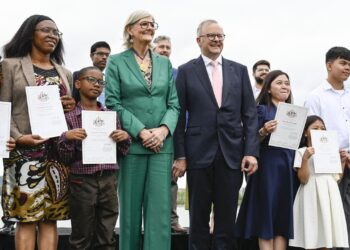
Because Australia is a country where multiculturalism is not a slogan, but a way of life and a state policy.
The Ministry for Multiculturalism and its staff actively provide both material and moral support.
According to census data, more than 300 ethnic backgrounds live peacefully on this land.
From Europe to Asia, from Africa to the Middle East, this island continent is a vast human mosaic.
According to 2024 data, approximately 8.6 million Australian citizens were born in another country.
This represents around 31.5 per cent of the total population.
In the 2021 census, this figure was 27.6 per cent.
This rapid increase clearly demonstrates the dynamism migration brings to Australian society.
Of Australia’s population of around 27 million:
-
43.9 per cent identify as Christian,
-
38.9 per cent as secular,
-
3.2 per cent as Muslim,
-
2.7 per cent as Hindu,
-
2.4 per cent as Buddhist,
-
0.8 per cent as Jewish or Sikh.
In Sydney, mosques are opening one after another; Muslims line up shoulder to shoulder on Fridays, flocking in powerful unity to prayer.
At the same time, churches overflow on Sunday mornings.
Beliefs may differ, but the search is the same: peace, justice, and humanity.
Violence and terrorism have no place in any faith. Neither Islamophobia nor antisemitism belongs anywhere.
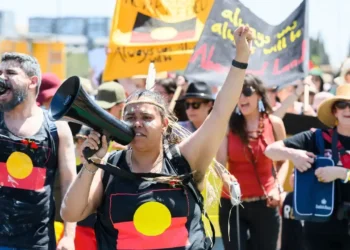
Months earlier, in response to the genocide in Gaza, all the colours of this city united in a single conscience.
Millions poured into Sydney Harbour, delivering a silent yet powerful march that told the world:
“Humanity is still alive.”
The human tide around the Harbour Bridge and the Opera House echoed across global media not only as an image of Sydney, but as a portrait of the world’s conscience.
Who knows…
Perhaps the brutality that unfolded in Bondi was a dark attempt at retaliation against that powerful image of humanity rising from the bridge.
Everyone draws generously from the climate, the ground, and the richness of this culture of tolerance.
This diversity in Australia continues with the support of the state and through policies that remain unchanged regardless of governments.
Harmony, coexistence, and mutual respect are not merely words they are lived as core values in public life.
Yet from time to time, ill-intentioned individuals, from within or outside, attempt to target this peace.
That was precisely the purpose of the Bondi attack:
to shake the perception of a safe, free, and tolerant Australia.
An effort to import hatred, resentment, and terror into these lands.
What happened suddenly took us 30 years back.
In 1996, 35 people were massacred in Port Arthur, Tasmania.
Australia entered deep mourning — but at the same time made a historic decision.
Approximately 650,000 firearms were collected and destroyed by the state.
These reforms became known around the world as the “Australian model.”
Years later, the attack in Bondi — although different in scale — revived the same pain.
Attacks on public spaces wound not just one community, but all of us.
Port Arthur showed that precaution and collective resolve save lives.
Bondi reminded us how vital it is to keep that responsibility alive.
The attackers in Bondi, sadly, stained the face of humanity and the pure face of Islam.
For this reason, our pain was doubled.
Because in our belief,
“To kill one innocent person is like killing all of humanity.”
And yet, in the very centre of this darkness, a light emerged.
Ahmed el Ahmed, a Syrian migrant, put his life on the line.
He moved toward the attacker, offering his body so that more people would not die.
He was shot.
He was critically injured.
Ahmed’s instinct reflected the conscience of Australian society.
Having fled Syria in 2006 from the Assad regime, and after years of hardship becoming an Australian citizen in 2022, citizenship for Ahmed was not merely a document it was belonging, conscience, and responsibility.
That is why Bondi Beach is not just a beach.
It is a shared living space where different identities coexist side by side.
“This place belongs to all of us,” Ahmed said.
And he became a hero in the hearts of Jews, Christians, Buddhists, and Muslims alike.
Australia’s Governor-General, Sam Mostyn, visited Ahmed in hospital to convey the gratitude and well wishes of all Australians.
She also relayed that His Majesty King Charles had personally called during the night and asked that his special message be delivered to Ahmed.
Prime Minister Anthony Albanese and NSW Premier Chris Minns declared Ahmed “Australia’s hero.”
US President Donald Trump also sent his greetings from the White House.
Indeed, in many ways, Ahmed who fled the Assad regime became a moment of pride and deep emotion for Muslims everywhere.
This migrant, who did not step back amid gunfire, proved that the will to live together is not rhetoric it exists at the very centre of life itself.
Sadly, the fire ignited in Bondi is not disconnected from the fires burning elsewhere in the world.
From the mosque attack in Christchurch, New Zealand, to the devastation in Ukraine, Syria, and Gaza, similar atrocities across the globe feed the same ember in all our hearts.
Wherever humanity bleeds, pain must be shared.
Final word;
And on that day, Bondi united in a single sentence:
“Thank you, Hero Ahmet!”
Author’s Note: I extend my condolences to all innocent lives that were lost.