Turkish comedian Deniz Göktaş has said he never regretted the stand-up performance that landed him in jail for 88 days, telling The New York Times that the experience strengthened his confidence and his commitment to speaking freely.
“Not even one second,” he said when asked whether he had regretted releasing the show. “It was the period of my life when I felt the least lonely.”
In his first interview since leaving prison last month, Göktaş told the newspaper that he had wanted his courtroom defense to encourage other comedians to speak without fear, even after people close to him warned that it could prolong his detention.
“I didn’t want to be apologetic,” he said. “Spending three months in prison is terrible, but I wanted to demonstrate that it isn’t something an artist can’t handle in defense of a principle.”
The 32-year-old was convicted on September 28 of insulting President Recep Tayyip Erdoğan and publicly insulting religious values. The court sentenced him to just over 19 months in prison but ordered his release pending appeal. It acquitted him of praising crime and criminals.
The prosecution concerned remarks in his second stand-up special, “Ölü Deniz” (Dead Sea), a 90-minute performance that moves between political satire and observations about Turkish society. Its subjects include Erdoğan, jailed İstanbul Mayor Ekrem İmamoğlu, religion, nationalism, universities, public protests and the secular children of conservative families.
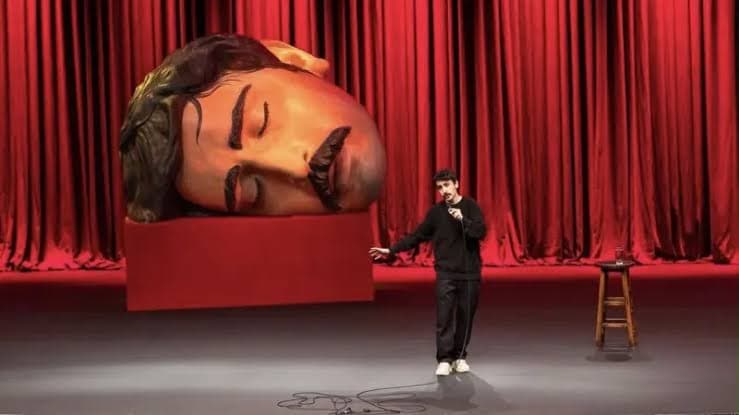
Behind Göktaş onstage sits a giant replica of his own severed head. He told the Times that the image was intended to evoke a guillotine because the show was built around death and censorship.
One joke described Erdoğan’s evolution from a “shy dictator” into one who had become confident and at peace with himself. Göktaş said he had performed the material across Turkey for three years without facing the same consequences. The special reached a much larger audience after its release on YouTube, attracting 15 million views.
At his trial Göktaş defended political comedy as part of Turkey’s longstanding tradition of satire. His remarks repeatedly drew laughter in the courtroom as he challenged the prosecution’s interpretation of his jokes.
“Dictator is not an insult: it is a political characterization,” he said, arguing that a political comedy show that avoided mentioning the country’s president would have little connection to reality.
He said similar jokes had been made in the past without prosecution and attributed the change to leaders’ declining tolerance of criticism.