The International Federation for Human Rights (FIDH) and its member organization the Human Rights Commission of Pakistan (HRCP) said on Thursday that 285 Turkish nationals who live in Pakistan are at risk of forcible repatriation, arbitrary arrest and other human rights abuses after the recent deportation of the Kaçmaz family on Oct. 14 to Turkey over alleged links to the Gülen movement, which Turkish authorities blame for a failed coup last year.
In a statement on the FIDH website on Thursday, the rights groups called on the Pakistani government to ensure the protection of 285 Turkish nationals who are at risk of being deported to Turkey for their alleged links to the movement.
“The Pakistani government’s deportation of a Turkish family should set off alarm bells. The Pakistani government must ensure the protection of the other 285 individuals who risk being deported to Turkey and put an end to the blatant disregard of its international obligations,” Dimitris Christopolous, FIDH president said.
The statement said the 285 Turkish nationals, who formerly worked as teachers at Pak-Turk schools, and their families have been facing deportation to Turkey since November 2016 after the Pakistani government failed to extend their visas and ordered them to leave the country day before a visit to Pakistan by Turkish President Recep Tayyip Erdoğan.
“The 285 now live in fear of raids carried out by the Pakistani police and intelligence services in Pakistan. Should they be deported to Turkey, they are at high risk of arbitrary arrest, judicial harassment and detention upon arrival. Such detention may be accompanied by torture and other forms of ill-treatment. This occurs in the context of the Turkish government’s crackdown on teachers, journalists, academics, and human rights defenders in the aftermath of the July 2016 failed coup d’état in Turkey. Turkey has already succeeded in obtaining the forcible repatriation of teachers linked to the Pak-Turk schools from Malaysia, Myanmar, and Saudi Arabia,” the statement read.
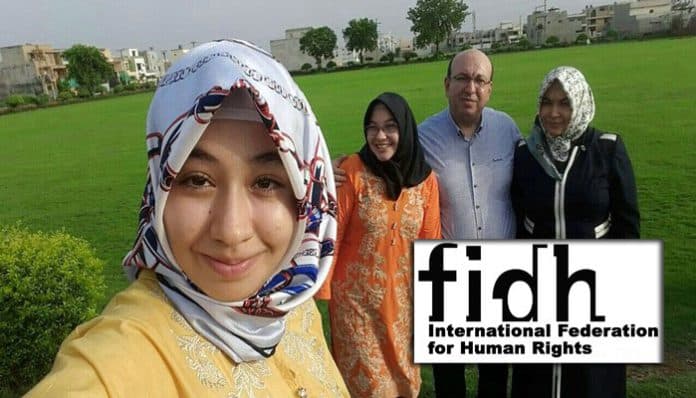
On Sept. 27, the former director of the Pak-Turk schools in Pakistan, Mesut Kaçmaz, along with his wife and two daughters, were abducted from their residence in Lahore and kept in custody in an unknown place until they were blindfolded and boarded an unmarked flight from Islamabad for İstanbul on the morning of Oct. 14 despite a habeas corpus decision by the Lahore High Court.
They were then transferred to Ankara for interrogation.
While Mesut Kaçmaz and his wife Meral were put in pretrial detention after interrogation, it was learned that the teenage daughters of the Kaçmaz couple were not detained and were reportedly staying with a relative in İstanbul.
The four members of the Kaçmaz family had been living in Pakistan under the protection of the UNHCR.
When asked to comment on abduction of the Kaçmaz family members, Pakistan’s Foreign Affairs Minister Khawaja Asif said during a visit to the US in early October that the Turkish teachers and their families would only be deported once delays granted by the Pakistani courts and protection afforded by the United Nations High Commissioner for Refugees (UNHCR) had expired.
The Pakistani government’s initial deportation order for the Turkish teachers to leave Pakistan by Nov. 20, 2016 had been suspended by several Pakistani high courts.
Underlining that the UNHCR certificates of 285 Turkish teachers and their families were extended until Oct. 11, 2018, the FIDH statement said they now face broader challenges concerning their status such as the fact that 85 people have newborn children without passports; others have passports that have expired; and the members of one family have been stripped of Turkish citizenship.