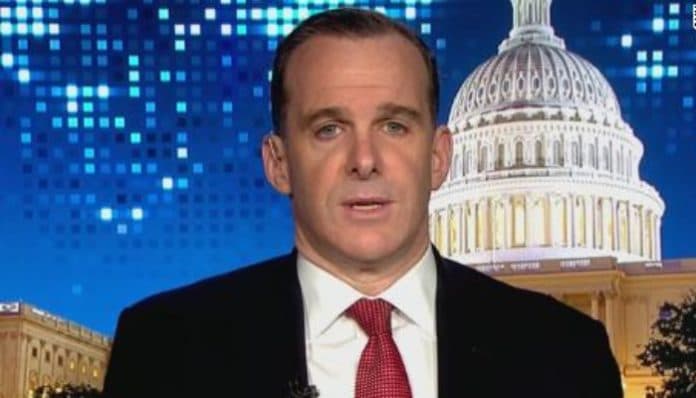
“I probably spent most of my time in our first year on the job … in Ankara because most of the material coming to fuel the ISIS war machine frankly was coming across the border from Turkey to Syria,” said former US envoy to the international anti-ISIS coalition Brett McGurk, the Rudaw new website reported.
He was interviewed by CNN’s Christiane Amanpour on Monday evening.
The United States wanted to work more closely with Turkey to ensure the lasting defeat of the Islamic State in Iraq and Syria (ISIS) in Syria but found Ankara’s plans to be unrealistic, and it was impossible for the coalition to work with fighters Turkey backed in Syria linked to al-Qaeda, McGurk added.
“Our interests in Syria in many fundamental ways really diverge,” he said.
“And when President [Recep Tayyip] Erdoğan puts on the table proposals that might look good in concept, every time we send our best people, our best planners, to really dig in to what we can actually do together, it never really pans out.”
When Barack Obama was US president, Washington and Ankara both had covert and overt programs to oust Syrian President Bashar al-Assad. The United States shifted to an ISIS-centric approach and abruptly ended its covert program against Assad after Donald Trump became president in 2016.
When ISIS quickly exploited the complexities in war-ridden Syria in 2014, McGurk began forming the international coalition, of which Turkey was not a party.
The coalition supported the establishment of the Syrian Democratic Forces (SDF) which are primarily composed of the predominately-Kurdish Peoples’ Protection Units (YPG). Ankara refuses to work with the SDF.
“The opposition groups that Turkey supports that you, for example, would send into a safe zone are simply not groups the United States have currently worked with. They are very closely tied with extremist groups,” said McGurk.