By Dr. Ismail Mesut Sezgin
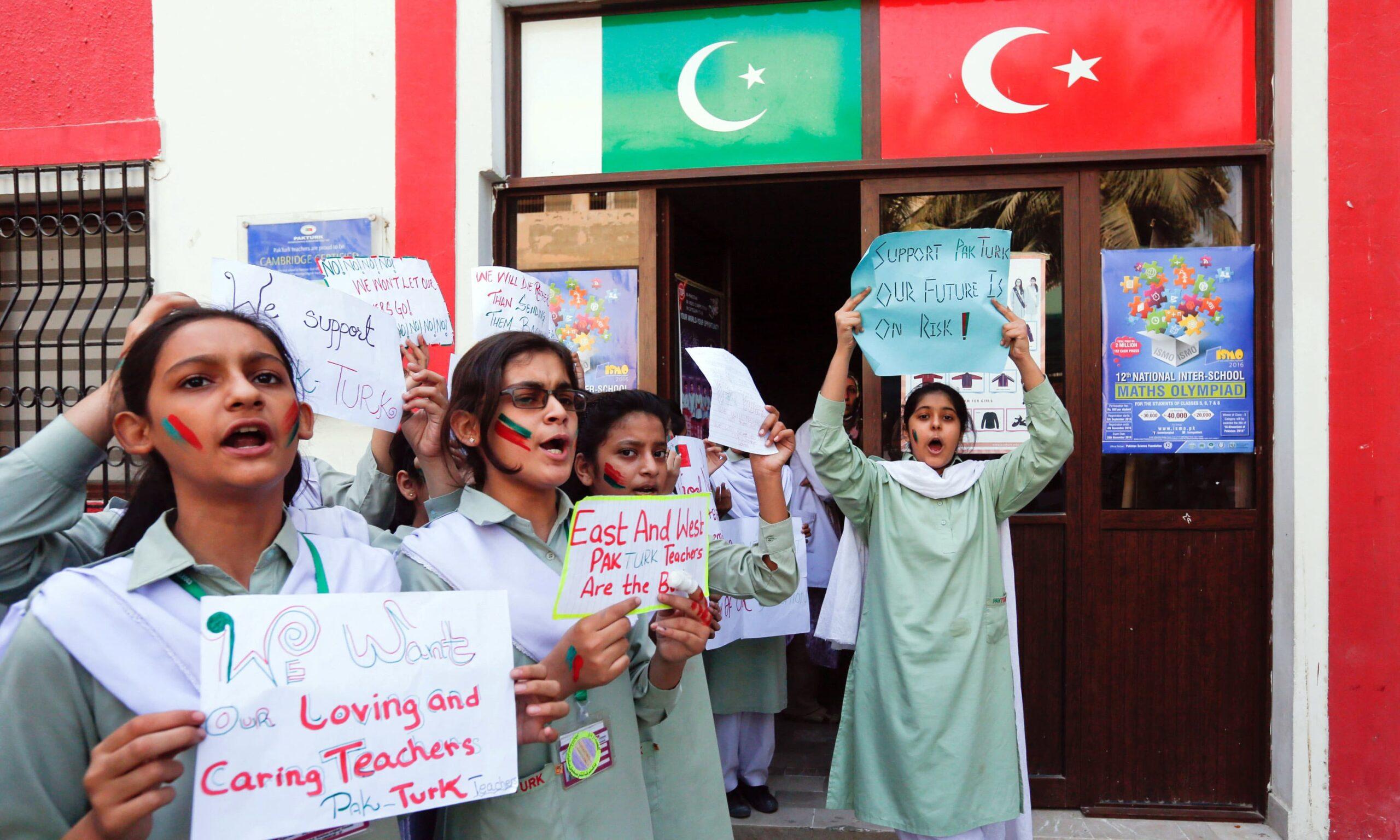
In order to please President Recep Tayyip Erdoğan before his visit to Pakistan, the Pakistani government ordered more than 100 Turkish teachers from the Pak-Turk schools to leave the country within three days. By the time you read this article, these teachers and their families (about 450 men, women and children) will be in a very difficult position: They cannot return to Turkey because they will be persecuted there as well.
Pakistan is a sovereign country, of course, and is able to do whatever it pleases, but how ethical is this order? What does it mean for the world community? Should we be concerned about this?
At a time when the whole world is concerned about containing and defeating extremism and terrorism, the Islamic State in Iraq and the Levant (ISIL) and Boko Haram in particular, it is worth paying special attention to this apparently trivial decision to deport teachers from Pakistan to please the Turkish president.
Boko Haram: Western education is forbidden
Boko Haram is less familiar than ISIL but shares many of ISIL’s aims and claims affiliation with it. Boko Haram’s name is translated as “Western-style education is forbidden.” This terrorist group intimidates communities into rejecting education, so they do not let their children go to school. They gained worldwide notoriety when they abducted 276 schoolgirls from Chibok so as to deter parents from educating their daughters. The world reacted with #BringBackOurGirls. Of course, Boko Haram did not release the girls. Only 57 of them have managed to escape, but the rest are still in captivity for the “crime” of going to a school rather than a madrasa.
So what we see is a group of people who claim to be religiously inspired but who terrorize others, kill, kidnap and bomb to deter people from secular education. The world has united to stand against it, as we should. But has this outspoken condemnation proven to be a solution? No, it hasn’t.
In sharp contrast to Boko Haram, there is a faith-inspired group, in this case a civil society movement that engages in education, dialogue and charitable activities and has grown out of Muslim grass roots. The Hizmet movement has been a phenomenon in Turkish society since the 1960s, and its participants are known for their efforts to promote secular education, interfaith dialogue and the alleviation of poverty, especially in the poorest parts of the world. They expanded their range in the 1990s when they started opening schools in the rest of the world as well.
This support for secular and scientific education is particularly effective and notable because it comes from a faith (Islamically) inspired movement. The first school established in Pakistan by movement supporters and participants opened in 1995, and it has been quite a success story since then. There are now 28 schools in Pakistan, established by using local funds and donations from Turkish philanthropists, and these schools have the highest standards of scientific secular education for approximately 10,000 boys and girls. As such, the schools represent a nightmare for groups such as Boko Haram and their destructive ideology.
The Hizmet-affiliated schools have come under much pressure since Erdoğan declared Hizmet public enemy number one in Turkey. He has used the coup attempt as a pretext to shut down 800 of the best secular schools in Turkey, none of which have any record of criminal activity; he has also closed thousands of NGOs and charities whose only fault was not being numbered among his supporters. He clamped down on critical media outlets and imprisoned 144 journalists so no one can tell any story different from the official narrative. He is also pressuring foreign governments to do the same in their countries.